

How Answer Engine Optimization Improves AI Search
Introduction
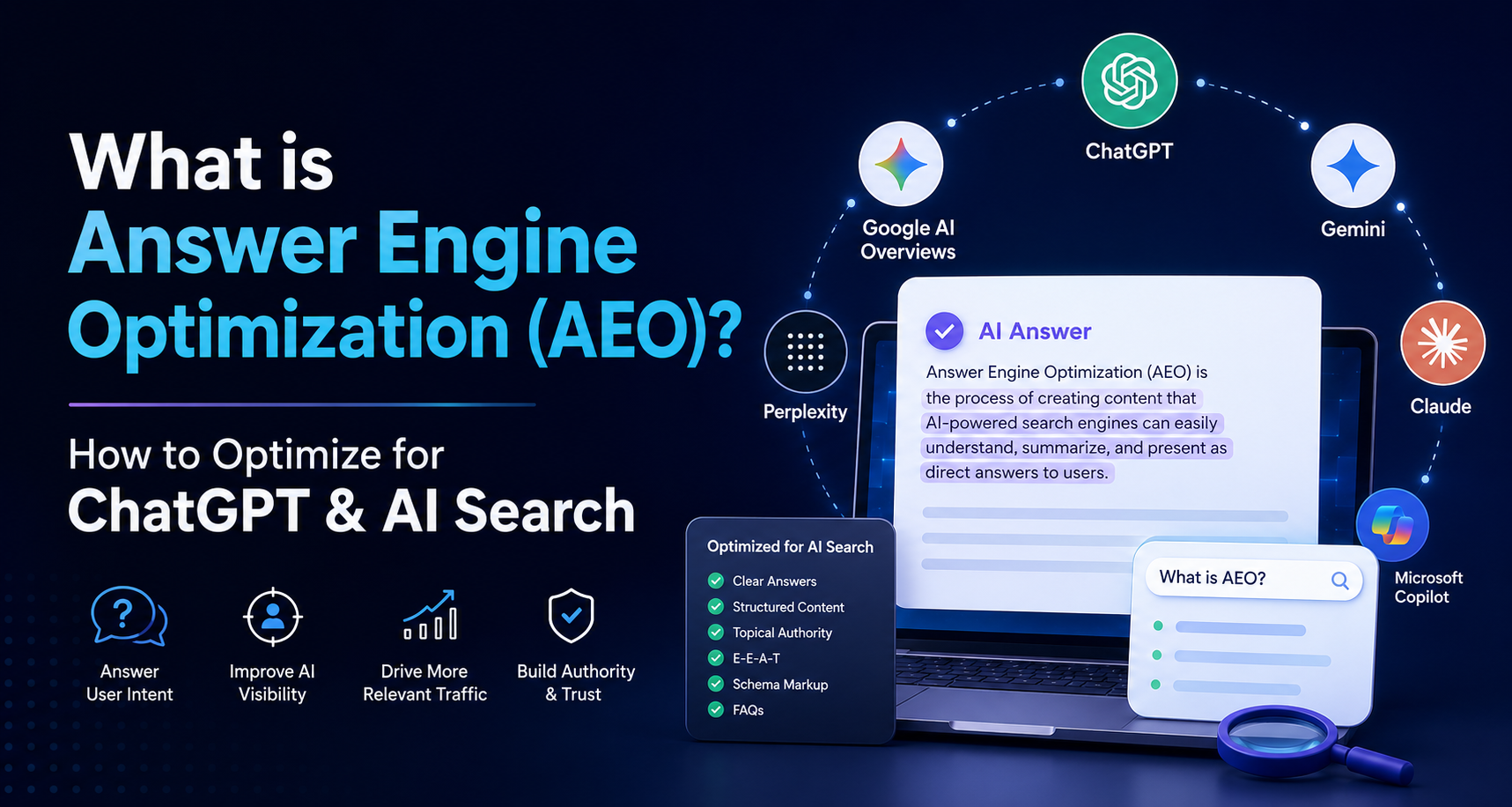
Search is changing rapidly. Instead of typing a few keywords into Google and browsing multiple websites, people are increasingly asking complete questions to AI-powered platforms like ChatGPT, Google AI Overviews, Gemini, Claude, Microsoft Copilot, and Perplexity. They expect instant, accurate, and conversational answers.
This shift is transforming how businesses need to create content. Ranking on Google’s first page is still important, but it’s no longer enough. If your content isn’t optimized for AI-powered search, you’re missing a growing opportunity to reach your audience where they now search for answers.
This is where Answer Engine Optimization (AEO) comes in.
Answer Engine Optimization helps structure and optimize your content so AI systems can understand, summarize, and confidently present it as the best answer to users’ questions. In this guide, you’ll learn what AEO is, why it’s important, how it works, and the best practices to optimize your content for the future of search.
What Is Answer Engine Optimization (AEO)?
Answer Engine Optimization (AEO) is the process of creating and optimizing content so AI-powered search engines and virtual assistants can understand, interpret, and present it as a direct answer to user queries.
Unlike traditional Search Engine Optimization (SEO), which focuses on improving rankings in search engine results pages (SERPs), AEO focuses on helping AI systems deliver the most relevant, accurate, and trustworthy answer to a user’s question.
For example, when someone asks:
“What is Answer Engine Optimization?”
A search engine may display a list of web pages, while an AI platform like ChatGPT or Google AI Overviews provides a summarized answer. AEO increases the likelihood that your content contributes to or is reflected in that answer.
In simple terms:
- SEO helps people find your content.
- AEO helps AI understand and recommend your content.
Why Is Answer Engine Optimization Important?
The way people search online is changing. Users increasingly rely on AI tools for quick, conversational answers instead of clicking through multiple search results.
This evolution makes AEO an essential part of any modern content strategy.
AI Search Is Growing
Millions of users now turn to AI platforms for research, learning, product comparisons, and recommendations. As AI-powered search continues to evolve, businesses need to ensure their content is optimized for these new experiences.
Users Want Instant Answers
- Today’s users value speed and clarity. They want direct answers without reading several articles to find the information they need.
- Content optimized for AEO is structured to provide those answers quickly and effectively.
Traditional SEO Alone Is No Longer Enough
- SEO remains a critical foundation for online visibility, but it doesn’t fully address how AI systems process and present information.
- AEO complements SEO by making content easier for AI platforms to interpret, summarize, and reference.
It Builds Long-Term Authority
Well-structured, comprehensive content demonstrates expertise and increases the likelihood of being recognized as a trusted source over time.
How Does Answer Engine Optimization Work?
AEO focuses on understanding user intent and presenting information in a way that is easy for both people and AI systems to consume.
Step 1: Understand User Intent
Every piece of content should answer a real question that users are asking.
Instead of targeting only keywords like “AEO”, think about questions such as:
- What is AEO?
- Why is AEO important?
- How does AEO differ from SEO?
- How can I optimize my website for AI search?
Answering these questions naturally improves relevance.
Step 2: Provide Direct Answers
Place the most important answer near the beginning of the article or section.
This improves readability and increases the chances of your content being used in AI-generated responses.
Step 3: Structure Your Content Clearly
Organize your content with:
- Descriptive headings
- Bullet points
- Numbered lists
- Tables
- Short paragraphs
- FAQ sections
A logical structure makes content easier to understand for both readers and AI systems.
Step 4: Demonstrate Expertise
AI systems prioritize content that appears trustworthy and authoritative.
Strengthen your content by including:
- Practical insights
- Industry experience
- Examples
- Data and research
- Clear explanations
Step 5: Keep Content Updated
Review your content regularly to ensure it reflects current trends, technologies, and best practices.
Fresh, accurate content is more valuable to both users and AI-powered search engines.
Benefits of Answer Engine Optimization
1. Improved Visibility in AI Search
Optimizing for AEO increases the likelihood that your content will appear in AI-generated answers across multiple platforms.
2. Better User Experience
Users receive clear, concise, and well-structured answers, making it easier for them to find the information they need.
3. Increased Content Authority
Comprehensive and well-organized content helps establish your website as a trusted source of information.
4. Future-Proof Your Content Strategy
As AI search continues to grow, businesses that adopt AEO early will be better positioned to maintain visibility and relevance.
Common Challenges and Mistakes
Many organizations struggle with AEO because they continue using outdated SEO practices.
Here are some common mistakes to avoid.
Writing Only for Search Engines
Content should answer user questions naturally rather than forcing keywords into every paragraph.
Ignoring User Intent
If your content doesn’t solve the reader’s problem, it’s unlikely to perform well in either traditional or AI search.
Publishing Thin Content
Short, surface-level articles often fail to provide enough context for AI systems to trust and recommend.
Poor Content Structure
Large blocks of text without headings, lists, or summaries reduce readability and make content harder to interpret.
Neglecting Content Updates
Outdated information can reduce credibility and limit your chances of being surfaced in AI-generated answers.
How to Optimize Your Content for AI Search?
If you’re starting with AEO, focus on these best practices.
Answer the Primary Question Early
Provide a concise answer within the first 100–150 words.
Use Question-Based Headings
Frame sections around the questions your audience is asking.
Build Topical Authority
Create multiple related articles around a core topic rather than relying on a single blog post.
Write in Natural Language
Use clear, conversational language that mirrors how people ask questions.
Include FAQ Sections
Address common follow-up questions with concise, standalone answers.
Add Relevant Schema Markup
Structured data helps search engines understand your content and may enhance its visibility in search features.
Strengthen Internal Linking
Connect related articles to improve navigation and reinforce topical relevance.
Demonstrate E-E-A-T
Showcase experience, expertise, authoritativeness, and trustworthiness through accurate, well-supported content.
SEO vs AEO vs GEO
| SEO | AEO | GEO |
| Focuses on search rankings | Focuses on direct AI answers | Focuses on AI understanding and citations |
| Targets keywords | Targets user questions | Targets comprehensive topical coverage |
| Optimizes for search engines | Optimizes for answer engines | Optimizes for generative AI systems |
| Measures rankings and traffic | Measures answer visibility and relevance | Measures AI discoverability and authority |
The most effective content strategy combines all three approaches.
Why Businesses Should Invest in AEO
Businesses that embrace AEO today are preparing for the future of digital discovery.
Investing in AEO helps you:
- Stay competitive as AI search adoption grows.
- Improve content quality and user experience.
- Increase brand visibility across multiple AI platforms.
- Build long-term authority within your industry.
- Support both traditional SEO and AI-driven search experiences.
Rather than replacing SEO, AEO strengthens your overall digital marketing strategy.
Key Takeaways
- Answer Engine Optimization (AEO) helps AI-powered search platforms understand and present your content.
- Traditional SEO remains important but should be complemented by AEO.
- Focus on answering user questions clearly and directly.
- Well-structured content improves readability and AI understanding.
- Building topical authority increases trust and visibility.
- Demonstrating expertise and keeping content updated are essential.
- Businesses that invest in AEO today will be better prepared for the future of search.
Frequently Asked Questions
What is Answer Engine Optimization (AEO)?
Answer Engine Optimization is the practice of optimizing content so AI-powered search engines and assistants can understand, summarize, and present it as direct answers to user questions.
Is AEO replacing SEO?
No. AEO complements SEO by extending your content strategy to AI-powered search experiences.
Which AI platforms use AEO principles?
Platforms such as ChatGPT, Google AI Overviews, Gemini, Claude, Microsoft Copilot, and Perplexity all rely on clear, trustworthy, and well-structured information to generate responses.
How do I optimize content for AI search?
Focus on user intent, answer questions directly, organize content with descriptive headings, build topical authority, use structured data where appropriate, and keep your content updated.
Does Schema Markup help with AEO?
Schema Markup improves how search engines understand your content and can support richer search experiences. While it is not a direct ranking factor for AI systems, it contributes to better content organization and discoverability.
Conclusion
Search is evolving from keywords to conversations. Users no longer want to sift through pages of results—they want accurate answers delivered instantly by AI-powered platforms.
Answer Engine Optimization (AEO) helps businesses adapt to this shift by creating content that is clear, structured, authoritative, and genuinely useful. When combined with traditional SEO and a strong content strategy, AEO can improve visibility across both search engines and AI-powered answer platforms.
The future of digital marketing isn’t about choosing between SEO and AI search. It’s about creating content that serves people first while making it easy for AI systems to understand and trust. Businesses that start optimizing for AEO today will be better positioned to reach audiences as search continues to evolve.
Tags:
Categories
- AI (1)
- Marketing Research (3)
- Paid Ads (1)
-
July 27, 2026
Google Ads Introduces a New Leads (Beta) Section
-
July 27, 2026
A/B Testing: Improve Ad Conversion Rates Effectively
-
July 27, 2026
Content Funnel Audit: Map Content to Every Buying Stage
-
July 27, 2026
How Answer Engine Optimization Improves AI Search