

I am
Ajay.
Performance Marketing Manager Growth Marketing Strategist


10

+
years experience


How I Think About Marketing
1. Budget is a hypothesis, not a plan.
Every rupee I spend is a bet on an assumption about the customer. My job is to find out which assumptions are wrong, fast.
2. The best campaigns get killed early, not optimized forever.
I'd rather admit something isn't working in week two than defend it in week eight.
3. A funnel is a conversation, not a machine.
Behind every "conversion rate" is a person deciding whether to trust you. I design for that person, not the percentage.
-
%
What Can I Do
Helping businesses grow online with strategic marketing, paid advertising, SEO, and data-driven decision-making.
-

Performance Marketing
Google Ads, Meta Ads, YouTube Ads, Campaign Strategy, Budget Optimization, Lead Generation, Customer Acquisition
-

Search Engine Optimization
Technical SEO, On-Page SEO, Off-Page SEO, Local SEO, Content Strategy, Keyword Research, Answer Engine Optimization, Generative Engine Optimization.
-

Social Media Marketing
Content Strategy, Organic Growth, Community Management, Social Media Campaigns, Brand Building, Audience Engagement, Influencer Marketing, Retention Marketing
-

Growth Marketing
Marketing Automation, Funnel Optimization, WhatsApp & Email Marketing, Customer Retention, A/B Testing, Performance Analytics

Professional Timeline
A decade of experience helping businesses grow through performance marketing, SEO, growth strategies, and data-driven digital campaigns across diverse industries.
-
-

Marketing Manager
DevDynamics IT Services Pvt. Ltd.Leading multi-brand digital marketing initiatives across performance marketing, SEO, branding, CRM automation, website strategy, and customer acquisition to drive measurable business growth.
-
2025 – Present
-

-
-
-

Digital Marketing Manager
Vakil SearchManaged integrated digital marketing campaigns across multiple brands, driving lead generation, performance marketing, SEO, and conversion optimization.
-
2024 – 2025
-
-
-
-

Digital Marketing Manager
Inspiron Psychological Well Being Pvt. Ltd.Strengthened brand visibility and customer engagement through performance marketing, SEO, retention strategies, and integrated digital campaigns.
-
2023 – 2024
-
-
-
-

Associate Manager – Ad Operations
The Media AntDelivered high-impact Programmatic, OTT, and Connected TV advertising campaigns while optimizing campaign performance for leading brands.
-
2023
-
-
-
-

Operations Manager - Marketing
Pristech Technologies Pvt. Ltd.Led marketing initiatives for Smart Parking and Smart Mobility solutions through digital campaigns, app marketing, branding, and cross-functional marketing operations.
-
2021 – 2022
-
-
-
-

Product Manager
Tarrahlthistyl Pvt. Ltd.Managed e-commerce growth across leading marketplaces while driving product marketing, Amazon PPC, SEO, influencer marketing, and product launch strategies.
-
2019 – 2021
-
-
-
-

Assistant and Admin Manager – Sales & Marketing
Benchmark Facility ManagementEstablished the organization's digital marketing presence while supporting sales operations and campaign reporting.
Led digital marketing and customer acquisition initiatives, improving lead generation, customer retention, and strategic business partnerships. -
2016 - 2019
-
-




Our Best Pricing Table
Fusce sollicitudin eros id ex maximus gravida non vitae ante. Cras ac mi a dolor suscipit rutrum ut vitae mi.
-
 Personal
50€
High Quality Logo
Premium products Stock Photos
Premium Stock Photos & Icons
JPEG And PDF Format Ready
Exclusive Live Chat Support
-
Business
60€
popularHigh Quality Logo
Premium products Stock Photos
Premium Stock Photos & Icons
JPEG And PDF Format Ready
Exclusive Live Chat Support
-
Developer
90€
High Quality Logo
Premium products Stock Photos
Premium Stock Photos & Icons
JPEG And PDF Format Ready
Exclusive Live Chat Support




Latest News & Articles
Explore practical guides, industry trends, and actionable marketing insights designed to drive growth and improve digital performance.
-
July 29, 2026
SEO vs AEO vs GEO: The Complete Guide with Website Examples, Right & Wrong Approaches, and Best Practices
The way people discover businesses online has changed dramatically.
A few years ago, businesses only needed SEO (Search Engine Optimization) to rank on Google. Today, users not only search on Google but also ask questions directly to AI tools like ChatGPT, Gemini, Claude, and Perplexity.
This has introduced two new concepts:
- AEO (Answer Engine Optimization)
- GEO (Generative Engine Optimization)
Many marketers believe these are completely different strategies. In reality, they complement each other.
This guide explains:
- What SEO, AEO, and GEO are
- How they differ
- Website structure examples
- Right and wrong approaches
- Practical examples using a product website
- Whether you should separate SEO, AEO, and GEO into different sections
What is SEO?
SEO (Search Engine Optimization) is the process of optimizing a website so that it ranks higher on search engines like Google and Bing.
Goal
Increase:
- Organic Traffic
- Website Rankings
- Clicks
- Leads
- Sales
Example
A user searches:
Best running shoes for beginners
Google shows a list of websites.If your website appears on the first page, your SEO strategy is working.
SEO Focus Areas
- Keyword Research
- Technical SEO
- On-page SEO
- Content Optimization
- Internal Linking
- Page Speed
- Mobile Friendliness
- Backlinks
- User Experience
What is AEO?
AEO (Answer Engine Optimization) is the process of creating content that directly answers users’ questions.
Instead of only showing website links, Google now displays:
- Featured Snippets
- AI Overviews
- People Also Ask
- Voice Search Results
Example
User searches:
What is EVA foam?
Google immediately answers:
“EVA foam is a lightweight material commonly used in running shoe midsoles for cushioning and shock absorption.”
The user may never click a website.
That is AEO.
AEO Focus Areas
- FAQs
- Definitions
- Short Answers
- Lists
- Tables
- Step-by-step Guides
- Schema Markup
What is GEO?
GEO (Generative Engine Optimization) is the practice of creating content that AI platforms can understand, trust, and use while generating responses.
Examples include:
- ChatGPT
- Gemini
- Claude
- Perplexity
- Microsoft Copilot
Example
A user asks ChatGPT:
Recommend the best running shoe brands for marathon training.
Instead of returning links, ChatGPT generates an answer based on information from trusted and authoritative sources.
If your website consistently publishes expert, original, and trustworthy content, it has a better chance of influencing those AI-generated responses.
GEO Focus Areas
- Original Research
- Expert Content
- Case Studies
- Statistics
- Author Information
- Brand Authority
- Trust Signals
- Updated Information
- Detailed Product Information
SEO vs AEO vs GEO
Feature SEO AEO GEO Focus Search Engines Answer Engines AI Models Goal Website Ranking Direct Answers AI Recommendations Users Google Search Google AI & Voice Search ChatGPT, Gemini, Claude Success Metric Traffic Answer Visibility Brand Mentions & AI Citations Shoe Website Example
Imagine you own a premium running shoe brand.
A modern homepage could look like this:
- Hero Banner
- Trust & Credibility
- Featured Products
- Shop by Category
- Why Choose Us
- Best Sellers
- Customer Reviews
- Brand Story
- Buying Guide
- FAQs
- Blogs
- Contact Us
- Footer
Each section can be optimized for SEO, AEO, and GEO at the same time.
Homepage Structure with SEO, AEO & GEO
Section SEO AEO GEO Hero Banner Primary keyword, H1, CTA Clear value proposition Brand expertise, USP Trust & Credibility Shipping, warranty keywords Quick facts Awards, certifications Products Product keywords “Who is this product for?” Technology, materials, testing Categories Category keywords Category explanations Expert recommendations Why Choose Us Feature keywords “Why choose us?” Manufacturing process, expertise Reviews Review schema Customer concerns answered Detailed success stories Brand Story Company keywords Company overview Founder expertise, mission Buying Guide Informational keywords Buying advice Original research FAQs Long-tail keywords Direct answers Expert guidance Blogs Search intent How-to articles Industry insights Can We Use SEO, AEO, and GEO in the Same Section?
This is one of the most common questions marketers ask.
Answer: Yes.
You should not create separate content blocks for SEO, AEO, and GEO.
Instead, think of them as three optimization layers applied to the same content.
Wrong Approach ❌
Creating separate sections for each optimization type.
Why Choose Our Shoes
SEO: Premium running shoes for men.
AEO:
Q: Why should I buy these shoes?
A: They are lightweight.GEO:
We use advanced materials.
Problems:
- Poor user experience
- Repetitive content
- Unnatural writing
- Difficult to read
- Doesn’t provide additional value
Right Approach ✅
Why Choose Our Shoes
Our premium running shoes are designed for comfort, performance, and durability. Built using lightweight EVA cushioning and breathable mesh, they provide excellent support for daily training and marathon running.
✔ Lightweight
✔ Breathable
✔ Shock Absorption
✔ 30-Day Returns
✔ 1-Year Warranty
Frequently Asked Question
Why are these shoes suitable for long-distance running?
Their responsive cushioning, lightweight construction, and breathable upper help reduce fatigue during long runs while maintaining comfort.
What happened?
SEO
- Primary keyword included naturally
- Related keywords included
- Optimized heading
AEO
- Frequently Asked Question
- Direct answer
- Easy for Google AI to extract
GEO
- Product expertise
- Material information
- Trust signals
- Helpful explanation
One section serves all three purposes.
Product Page Example
Product
AirFlex Running Shoes
SEO
- Product Title
- Optimized URL
- Meta Description
- Product Images
- Product Keywords
AEO
Questions:
Is this shoe good for beginners?
Can I use it for the gym?
Is it waterproof?Each question has a concise answer that search engines can use.
GEO
Include:
- Tested by athletes
- Weight
- Cushion technology
- Best use case
- Material details
- Manufacturing quality
- Customer reviews
AI systems can better understand the product’s strengths.
Homepage Section Examples
Hero Banner
SEO -Premium Running Shoes for Men & Women
AEO -Lightweight running shoes designed for comfort and performance.
GEO -Designed by footwear experts and trusted by thousands of runners.
Trust & Credibility
SEO
- Free Shipping
- Easy Returns
- Secure Payments
AEO
- Free Shipping on Orders Above $50
- 30-Day Returns
GEO
- ISO Certified Manufacturer
- 10+ Years of Experience
- Award-Winning Product Design
Products
SEO
Running Shoes
Walking Shoes
Sports Shoes
Trail ShoesAEO
Who is this shoe for?
Perfect for beginners and daily runners.GEO
Include:- Technology
- Materials
- Testing
- Durability
- Ideal use cases
Why Choose Us
SEO – Use keywords naturally throughout the section.
AEO Answer: Why should customers choose your brand?
GEO
Explain:- Research
- Manufacturing process
- Sustainability
- Product development
- Expert team
FAQs
SEO – Target long-tail keywords.
AEO – Provide concise answers.
GEO – Include deeper expert guidance and practical recommendations.
Blogs
SEO – Target informational keywords.
Examples:- Best Running Shoes for Beginners
- How to Choose Running Shoes
- Running Shoe Buying Guide
AEO- Answer common customer questions.
GEO
Publish:- Original research
- Product comparisons
- Expert opinions
- Industry trends
- Customer case studies
A Simple Content Framework
For every important page or section, ask yourself three questions.
SEO
Can Google rank this page?
Focus on:
- Keywords
- Headings
- Internal links
- Meta tags
- Content quality
AEO – Can Google understand and display this as a direct answer?
Focus on:
- FAQs
- Definitions
- Short answers
- Lists
- Structured content
GEO – Can AI trust this content enough to reference it?
Focus on:
- Expertise
- Original insights
- Research
- Case studies
- Statistics
- Author credibility
- Trust signals
Final Takeaway
SEO, AEO, and GEO are not competing strategies—they work together.
Think of them as three layers of optimization applied to the same content:
- SEO helps search engines discover and rank your pages.
- AEO helps search engines extract concise answers for users.
- GEO helps AI systems understand your expertise and confidently incorporate your information into AI-generated responses.
The best-performing websites don’t create separate “SEO,” “AEO,” and “GEO” sections. Instead, every important page combines all three by using relevant keywords, answering user questions clearly, and demonstrating genuine expertise through original, trustworthy content.
Whether you’re building a product website, a service website, or an eCommerce store, this integrated approach ensures your content is optimized for today’s search engines and tomorrow’s AI-powered discovery platforms.
-
July 27, 2026
Google Ads Introduces a New Leads (Beta) Section
Google Ads has started rolling out a new Leads (Beta) section under the Goals → Conversions menu. Instead of managing all conversion actions in one place, Google is creating a dedicated workspace specifically for businesses focused on lead generation.
Although the feature is still in beta and may not be available in every account, it signals Google’s continued effort to simplify conversion management for advertisers who generate leads rather than direct online sales.
If your business relies on form submissions, phone calls, appointment bookings, or quote requests, this update is worth watching.
What’s New?
From the screenshot, a new Leads (Beta) option now appears under:
Goals → Conversions
It sits alongside existing options such as:
- Summary
- Value Rules
- Custom Variables
- Settings
- Uploads
This suggests Google is separating lead-focused conversion management from general conversion settings.
Note: Because the feature is in beta, Google may change its interface and functionality before the full rollout.
Why Is Google Introducing a Separate Leads Section?
Lead generation campaigns often require different measurement methods than ecommerce campaigns.
For example:
- A user submits a contact form.
- Someone calls your business from an ad.
- A visitor books a consultation.
- A customer requests a product demo.
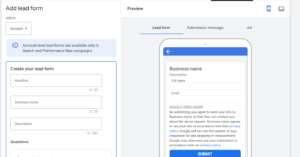
Unlike online purchases, these conversions usually continue offline through sales calls or CRM systems.
By introducing a dedicated Leads workspace, Google appears to be making these workflows easier to manage.
What You Can Expect
While Google hasn’t published complete documentation for this beta yet, the new section is likely to help advertisers manage lead-generation activities more efficiently.
Potential capabilities include:
Better Lead Conversion Management
Instead of searching through dozens of conversion actions, marketers may have one centralized location for lead-specific conversions.
Examples include:
- Contact forms
- Phone calls
- Appointment bookings
- Demo requests
- Quote requests
- Newsletter sign-ups
Easier Offline Conversion Tracking
Many businesses close deals after speaking with prospects offline.
A dedicated Leads section could simplify:
- CRM integrations
- Qualified lead imports
- Offline conversion uploads
- Lead status updates
This would help advertisers measure not just leads—but which leads become paying customers.
Improved Lead Quality Measurement
Google has been investing heavily in measuring lead quality instead of lead quantity.
Features like:
- Enhanced Conversions for Leads
- Offline Conversion Import
- Smart Bidding optimization
all rely on sending higher-quality conversion data back to Google Ads.
The new Leads workspace may become the central hub for these features.
Better Organization
Large Google Ads accounts often contain dozens or even hundreds of conversion actions.
Separating lead conversions from purchase conversions makes campaign management easier for:
- Marketing agencies
- Enterprise advertisers
- B2B companies
- Service businesses
Who Should Use It?
The new feature is particularly useful for businesses that generate leads instead of immediate online sales.
Examples include:
- Digital marketing agencies
- SaaS companies
- Real estate businesses
- Law firms
- Healthcare providers
- Financial services
- Education providers
- Home service companies
- Consultants
If your primary goal is collecting leads rather than processing online transactions, this update could become an important part of your advertising workflow.
Benefits for Advertisers
Some expected advantages include:
- Cleaner conversion management
- Better lead tracking
- Improved Smart Bidding signals
- Easier CRM integration
- More accurate reporting
- Better optimization for qualified leads
- Simplified campaign setup
As Google continues to invest in AI-powered bidding, providing better lead data becomes increasingly important.
Is It Available to Everyone?
Not yet.
The Leads (Beta) menu appears to be rolling out gradually.
If you don’t see it in your account:
- Your account may not be included in the beta yet.
- Google could be testing the feature with selected advertisers.
- Availability may expand over the coming months.
Should You Start Using It?
If the feature is available in your account, it’s worth exploring.
However:
- Avoid making major workflow changes until Google publishes official documentation.
- Continue following your existing conversion tracking setup.
- Monitor Google’s release notes for new capabilities.
Since the feature is still labeled Beta, changes are expected before its public release.
Best Practices
To prepare for this update:
- Audit your existing lead conversion actions.
- Ensure Enhanced Conversions are enabled where appropriate.
- Connect your CRM with Google Ads if possible.
- Import qualified offline conversions.
- Regularly review lead quality—not just lead volume.
- Keep conversion names organized and consistent.
Key Takeaways
- Google Ads is rolling out a new Leads (Beta) section under Goals → Conversions.
- The feature is designed to simplify lead-focused conversion management.
- It may improve workflows for CRM integration, offline conversion tracking, and Smart Bidding.
- Businesses focused on lead generation are likely to benefit the most.
- Because it’s still in beta, functionality may evolve as Google expands the rollout.
Conclusion
The introduction of Leads (Beta) reflects Google’s broader shift toward helping advertisers optimize for lead quality rather than simply generating more leads. While the feature is still in its early stages, it has the potential to make lead management more organized and better integrated with Google’s AI-driven advertising tools.
If you’re running lead generation campaigns, keep an eye on this update. As Google releases more documentation and expands availability, the new Leads workspace could become an essential part of managing and optimizing your conversion strategy.
References
- Google Ads Help Center
- Google Ads Release Notes
- Google Ads API Documentation
- Google Business Help Community
-
July 27, 2026
A/B Testing: Improve Ad Conversion Rates Effectively
A/B testing compares two versions of an ad by showing each version to similar audiences and measuring which performs better against a defined goal, such as clicks or conversions. Effective tests focus on one variable at a time, collect enough data for reliable results, and use insights to continuously improve advertising performance.
Table of Contents
- Introduction
- What Is A/B Testing?
- Why A/B Testing Matters for Ads
- Elements You Can Test
- How to Run an A/B Test Step by Step
- Measuring Results
- Best Practices
- Common Mistakes
- FAQ
- Key Takeaways
- Conclusion
1. Introduction
Successful advertising is rarely the result of guesswork. Even small changes to a headline, image, or call-to-action can significantly affect how people respond to an ad. Without testing, marketing teams risk making decisions based on assumptions instead of evidence.
This guide is for marketing professionals who want to improve advertising performance through structured experimentation. You’ll learn what A/B testing is, how to design reliable experiments, and how to use the results to make smarter marketing decisions.
2. What Is A/B Testing?
A/B testing, also known as split testing, is a controlled experiment that compares two versions of the same marketing asset to determine which one performs better.
Version A serves as the control, while Version B contains a single intentional change. Both versions are shown to similar audiences under the same conditions, and performance is measured against a predefined objective.
For digital advertising, common goals include:
Increasing click-through rate (CTR)
Improving conversion rate
Lowering cost per acquisition (CPA)
Increasing return on ad spend (ROAS)
Instead of relying on opinions, A/B testing allows marketers to make decisions based on measurable user behavior.
Example
Imagine you’re running a Facebook ad promoting a free marketing webinar.
Version A: “Learn Advanced SEO Techniques”
Version B: “Boost Your Organic Traffic with Advanced SEO”
Both ads use the same image, audience, budget, and schedule. After collecting sufficient data, you compare which headline generates more registrations.
Practical Insight
Always define your success metric before launching a test. If your objective is lead generation, optimize for conversions—not just clicks.
Image Suggestion
A diagram comparing Ad A and Ad B leading to different conversion outcomes.
Filename
ab-testing-ad-comparison.webp
ALT Text
“Comparison of two digital ad versions in an A/B testing experiment.”
Key Point Summary
A/B testing isolates one change at a time to identify what improves advertising performance.
3. Why A/B Testing Matters for Ads
Digital advertising platforms provide extensive performance data, but data alone doesn’t reveal why one campaign outperforms another. A/B testing helps uncover the factors that influence user behavior.
Benefits include:
Higher conversion rates
Better return on advertising investment
Reduced wasted ad spend
Improved audience understanding
More confident decision-making
Instead of redesigning an entire campaign, marketers can test individual elements and apply winning variations across future campaigns.
For example, a stronger headline might improve click-through rates, while a clearer call-to-action increases completed purchases.
To further optimize campaigns, combine testing insights with Conversion Rate Optimization Fundamentals.
[Internal Link: Conversion Rate Optimization Guide]
Practical Insight
Even a modest improvement in conversion rate can significantly reduce acquisition costs when applied across large advertising budgets.
Key Point Summary
Continuous experimentation helps advertisers improve performance while reducing unnecessary spending.
4. What Can You Test in Digital Ads?
Almost every component of an advertisement can be tested. However, changing multiple elements simultaneously makes it difficult to determine which factor influenced the outcome.
Common testing variables include:
Headlines
The headline is often the first element users notice.
Test variations such as:
Question vs statement
Benefit-driven messaging
Emotional vs factual language
Short vs detailed headlines
Example
Version A:
“Save Time Managing Projects”
Version B:
“Complete Projects 30% Faster”
Images and Creative
Visuals strongly influence engagement.
You can compare:
Product images
Lifestyle photography
Illustrations
Different colors
Video vs static image
A software company, for instance, might compare a dashboard screenshot against an image of a customer using the product.
Call-to-Action (CTA)
Small wording changes can influence user behavior.
Examples include:
Get Started
Download Free Guide
Book a Demo
Try Free Today
Testing CTA language helps identify which action users are most willing to take.
Ad Copy
Experiment with:
Short vs long descriptions
Feature-focused messaging
Benefit-focused messaging
Customer pain points
Social proof
Audience Segments
While audience testing differs slightly from traditional A/B testing, comparing similar audience groups can reveal which customer segments respond best.
For example:
Returning visitors
First-time visitors
Small businesses
Enterprise buyers
Additional segmentation strategies are covered in Audience Targeting for Digital Advertising.
[Internal Link: Audience Targeting Guide]
Image Suggestion
An annotated advertisement highlighting testable components.
Filename
digital-ad-elements-testing.webp
ALT Text
“Digital advertisement showing headline, image, CTA, and description available for A/B testing.”
Key Point Summary
Test one variable at a time to clearly identify what drives better performance.
5. How to Run an A/B Test Step by Step?
Step 1: Define Your Objective
Start with one measurable goal.
Examples include:
Increase purchases
Improve lead generation
Increase registrations
Reduce acquisition cost
Avoid vague goals like “make the ad better.”
Step 2: Develop a Hypothesis
A hypothesis explains why you expect a change to improve results.
Example:
Changing the CTA from “Learn More” to “Start Free Trial” will increase conversions because it communicates immediate value.
A strong hypothesis keeps experiments focused and easier to evaluate.
Step 3: Select One Variable
Only change one element.
If you modify the headline, image, and CTA simultaneously, you won’t know which change produced the improvement.
Step 4: Split Traffic Evenly
Ensure both ad versions receive comparable audience exposure.
Most advertising platforms, including Google Ads and Meta Ads Manager, offer built-in experimentation tools that distribute traffic fairly between variations.
Step 5: Run the Test Long Enough
Ending a test too early often leads to misleading conclusions.
Allow sufficient time for:
Adequate impressions
Meaningful clicks
Reliable conversion data
Avoid declaring a winner after only a handful of conversions.
Step 6: Record Every Result
Document:
Hypothesis
Test duration
Variable tested
Audience
Results
Final decision
Maintaining a testing log prevents repeating unsuccessful experiments and builds institutional knowledge over time.
A structured documentation process also supports broader Marketing Experiment Frameworks.
[Internal Link: Marketing Experiment Framework]
Practical Insight
Treat every A/B test as a learning opportunity. Even unsuccessful tests provide valuable insights into customer preferences and messaging effectiveness.
Key Point Summary
A successful A/B test follows a disciplined process: define an objective, test one variable, collect sufficient data, and document the outcome.
6. How to Measure A/B Test Results?
Running an A/B test is only the first step. The real value comes from interpreting the results correctly and applying the insights to future campaigns.
Focus on metrics that align with your original objective rather than trying to improve every metric simultaneously.
Goal Primary Metric Supporting Metrics Increase clicks Click-Through Rate (CTR) Impressions, CPC Generate leads Conversion Rate Cost per Lead (CPL) Increase sales Conversion Rate Revenue, ROAS Reduce costs Cost per Acquisition (CPA) CTR, Quality Score For example, if Ad B receives more clicks but fewer purchases than Ad A, it isn’t necessarily the better advertisement. Always evaluate the metric that matches your business goal.
Understand Statistical Significance
Not every improvement represents a genuine trend. Sometimes one variation appears to perform better simply because of random chance.
Before choosing a winning version, ensure your test has:
A sufficient sample size
Enough conversions
Consistent traffic conditions
A meaningful improvement over the control
Many advertising platforms and A/B testing tools calculate statistical significance automatically. If they don’t, use a reputable statistical significance calculator before making campaign decisions.
Example
Suppose:
Ad A:1% conversion rate
Ad B:3% conversion rate
Although Ad B performs slightly better, a difference this small may not be statistically significant if only a few hundred users participated in the experiment.
Practical Insight
Treat statistically significant improvements as evidence—not guarantees. User behavior changes over time, so continue testing regularly.
Image Suggestion
A dashboard comparing conversion rates and confidence levels for two ad variants.
Filename
ab-test-results-dashboard.webp
ALT Text
“Analytics dashboard showing A/B test conversion rates and statistical confidence.”
Key Point Summary
Choose winners based on reliable data, not small or temporary performance differences.
7. Best Practices
Successful marketers approach A/B testing as an ongoing optimization process rather than a one-time task.
Follow these best practices:
Start with a clear business objective.
Test only one variable in each experiment.
Use a meaningful sample size before drawing conclusions.
Keep audience targeting, budget, and schedule consistent across variants.
Document every hypothesis, result, and lesson learned.
Repeat successful tests with new variations to achieve incremental improvements.
Prioritize tests that have the greatest potential business impact, such as headlines, offers, or landing page experiences.
Review historical test results before planning new experiments.
Consistent testing builds a knowledge base that improves campaign performance over time.
8. Common Mistakes
Even experienced marketers can undermine experiments by introducing avoidable errors.
Testing Multiple Variables at Once
Changing the headline, image, and CTA simultaneously makes it impossible to determine which change influenced performance.
Ending Tests Too Early
Declaring a winner after only a few conversions often leads to unreliable conclusions.
Ignoring Business Goals
A higher click-through rate is valuable only if it contributes to meaningful outcomes such as leads or sales.
Testing Without a Hypothesis
Random experiments rarely produce actionable insights.
Never Repeating Successful Tests
Consumer preferences evolve. Winning ads today may not perform as well six months from now.
Ignoring Audience Quality
Higher engagement doesn’t always translate into higher-quality customers. Evaluate downstream metrics such as qualified leads and revenue whenever possible.
9. Frequently Asked Questions
What is A/B testing?
A/B testing is a controlled experiment that compares two versions of a marketing asset to determine which performs better against a specific objective.
How long should an A/B test run?
Run the test until it reaches a sufficient sample size and statistical significance. The exact duration depends on traffic volume and conversion frequency.
Can I test multiple ads at the same time?
Yes, but each individual experiment should isolate a single variable. Running multiple independent A/B tests is preferable to changing several elements within one test.
Which advertising platforms support A/B testing?
Platforms such as Google Ads, Meta Ads Manager, LinkedIn Ads, Microsoft Advertising, and many third-party optimization tools provide built-in experimentation features.
What is the difference between A/B testing and multivariate testing?
A/B testing compares two versions with one primary change, while multivariate testing evaluates combinations of multiple variables simultaneously. Multivariate testing typically requires significantly more traffic.
What is a good conversion rate?
There is no universal benchmark. Conversion rates vary by industry, audience, product, campaign objective, and traffic source. Compare results against your own historical performance rather than relying solely on industry averages.
10. Key Takeaways
A/B testing replaces assumptions with data-driven decisions.
Define one measurable objective before launching a test.
Change only one variable per experiment.
Allow enough traffic and conversions before selecting a winner.
Measure metrics that align with your business goals.
Document every experiment to build long-term marketing knowledge.
Continue testing because customer behavior and market conditions change over time.
11. Conclusion
A/B testing is one of the most effective ways to improve advertising performance through continuous, evidence-based optimization. By testing a single variable, measuring the right metrics, and interpreting results carefully, marketing professionals can make informed decisions that increase conversions and maximize advertising efficiency.
Rather than searching for a single “perfect” advertisement, build a culture of experimentation. Small, consistent improvements accumulated over time often deliver far greater results than occasional large redesigns. The most successful marketing teams don’t stop testing after one win—they keep learning, refining, and optimizing every campaign.



Trusted Partners
Fusce sollicitudin eros id ex maximus gravida non vitae ante. Cras ac mi a dolor suscipit rutrum ut vitae mi.








Empowering 230,000+Businesses with Innovation trusted clients.